If you have any interest in OBGYN this will give you lots of exposure various procedures. The Physician and Staff are great and always ready to answer you questions! A paper is required for the rotation on a topic of your choosing within the field.
Showing posts with label Clinicals. Show all posts
Showing posts with label Clinicals. Show all posts
Thursday, May 25, 2017
Reproductive Endocrinology and Infertility Elective
Sorry I've been so behind on posting about my remaining electives! After taking a short break from electives, and taking Step 2 CK, I ventured back down to Augusta, Georgia to complete an elective in REI. I LOVED it. I was wanting exposure to various procedures in this area. While I didn't get a ton of hands on experience, I did get to witness IUI and IVF procedures. We also managed the diagnosis . and treatment of polycystic ovarian syndrome and amenorrhea. My knowledge of ovulation induction agents increase immensely and lastly we performed lots of surgeries from hysteroscopy, myomectomies, hysterectomies and tubal reconstruction microsurgeries.
If you have any interest in OBGYN this will give you lots of exposure various procedures. The Physician and Staff are great and always ready to answer you questions! A paper is required for the rotation on a topic of your choosing within the field.
If you have any interest in OBGYN this will give you lots of exposure various procedures. The Physician and Staff are great and always ready to answer you questions! A paper is required for the rotation on a topic of your choosing within the field.

Wednesday, June 8, 2016
Psychiatry Core Rotation
To be completely honest, I was not looking forward to completing this rotation. Mostly due to the uncomfortableness of the subject but I was pleasantly surprised how much I enjoyed. A lot of the patients just want to be listened to and you just have to have compassion.
I completed the rotation at Danbury Hospital in Connecticut and it was a great experience. The hospital is like a hotel and the people are just friendly all around. It was a breath of fresh air after my surgery rotation that wasn't exactly filled with the kindest of people. It just goes to show that the environment in which you surround yourself with really matters! Another great aspect of this program is they allow you to experience many different forms of psychiatry; child psychiatry, inpatient, outpatient, crisis intervention in the ER, consult psychiatry and visiting a drug rehab program.

My first week I spent doing consult psychiatry. These was a good experience and eased me into interviewing patients. These patients were admitted for a medical problem but since being in the hospital have developed a psychiatric condition or always had an underlying psychiatric condition. The doctor you work with is a pleasure to work with. He makes the week fun but also a learning experience.
My second week I spent doing crisis intervention. Danbury hospital has a great behavioral health portion of the ER. It was hit or miss with the business of the day depending on how many people came it. I worked hand in hand with social workers and nurse practitioners and developed my interviewing skills.
My third and fourth weeks I spent inpatient. I really enjoyed being inpatient. This is where you got the exposure to acute conditions. I worked with a fabulous, very knowledgable psychiatrist and really learned what good interviewing technique looked like.
My fifth and sixth weeks, I spent outpatient. Mainly working with patients that were in an Intensive Outpatient Program, attending therapy everyday. I got to sit in on many therapy sessions and truly understand all the different types.
Every monday afternoon all the psychiatry students would met, one would interview a patient while others observed and then we would discuss the case with a physician. The was probably the highlight of the rotation. The physician created a comfortable environment where we could state our opinions even if it meant disagreeing with what he thought was the diagnosis and encouraged us to defend our answers (which usually resulted in him being right but we learned but was wrong with our thinking ;))
We also have to complete three full H&Ps which was an great learning experience. They were critiqued and given back to us. I had written lots of medical H&Ps but the psychiatric H&P includes many different aspects including the mental status exam which we had never learned before. We always learned how to do a mini mental status exam but a full mental status exam involves much more.
We also had many lectures given by physicians.
I highly recommend this rotation even if you don't want to go into psychiatry because this is the last time you'll get trained if you don't go into psychiatry and take advantage of a great program!

Preparing for the Shelf:
I felt super prepared for this shelf, I studied a lot and the material just seemed to make sense to me. I had a hard time determining what the best resources for the shelf would be at first. A lot of the books I had only had DSM IV and I wanted to make sure I was studying DSM V. I used First Aid for Psychiatry and it is GREAT! I also watched DIT videos for a general overview as well as completed all uWorld questions. I had extra time in the end so I chose to look over Pretest questions but it was a DSM IV book so I had to pick and choose which questions to do.
I officially finished my last core and last shelf. The only thing standing between me and graduation is 4 more months of electives and Step 2 CK!

I completed the rotation at Danbury Hospital in Connecticut and it was a great experience. The hospital is like a hotel and the people are just friendly all around. It was a breath of fresh air after my surgery rotation that wasn't exactly filled with the kindest of people. It just goes to show that the environment in which you surround yourself with really matters! Another great aspect of this program is they allow you to experience many different forms of psychiatry; child psychiatry, inpatient, outpatient, crisis intervention in the ER, consult psychiatry and visiting a drug rehab program.

Danbury Hospital
My first week I spent doing consult psychiatry. These was a good experience and eased me into interviewing patients. These patients were admitted for a medical problem but since being in the hospital have developed a psychiatric condition or always had an underlying psychiatric condition. The doctor you work with is a pleasure to work with. He makes the week fun but also a learning experience.
My second week I spent doing crisis intervention. Danbury hospital has a great behavioral health portion of the ER. It was hit or miss with the business of the day depending on how many people came it. I worked hand in hand with social workers and nurse practitioners and developed my interviewing skills.
My third and fourth weeks I spent inpatient. I really enjoyed being inpatient. This is where you got the exposure to acute conditions. I worked with a fabulous, very knowledgable psychiatrist and really learned what good interviewing technique looked like.
My fifth and sixth weeks, I spent outpatient. Mainly working with patients that were in an Intensive Outpatient Program, attending therapy everyday. I got to sit in on many therapy sessions and truly understand all the different types.
Every monday afternoon all the psychiatry students would met, one would interview a patient while others observed and then we would discuss the case with a physician. The was probably the highlight of the rotation. The physician created a comfortable environment where we could state our opinions even if it meant disagreeing with what he thought was the diagnosis and encouraged us to defend our answers (which usually resulted in him being right but we learned but was wrong with our thinking ;))
We also have to complete three full H&Ps which was an great learning experience. They were critiqued and given back to us. I had written lots of medical H&Ps but the psychiatric H&P includes many different aspects including the mental status exam which we had never learned before. We always learned how to do a mini mental status exam but a full mental status exam involves much more.
We also had many lectures given by physicians.
I highly recommend this rotation even if you don't want to go into psychiatry because this is the last time you'll get trained if you don't go into psychiatry and take advantage of a great program!

CT sunset with students on the lake
Preparing for the Shelf:
I felt super prepared for this shelf, I studied a lot and the material just seemed to make sense to me. I had a hard time determining what the best resources for the shelf would be at first. A lot of the books I had only had DSM IV and I wanted to make sure I was studying DSM V. I used First Aid for Psychiatry and it is GREAT! I also watched DIT videos for a general overview as well as completed all uWorld questions. I had extra time in the end so I chose to look over Pretest questions but it was a DSM IV book so I had to pick and choose which questions to do.
I officially finished my last core and last shelf. The only thing standing between me and graduation is 4 more months of electives and Step 2 CK!

Took my shelf in Philadelphia right next to Independence Hall
Sunday, April 24, 2016
Surgery Core Rotation
At the end of March, I completed my surgery core rotation in Waterbury, CT at St. Mary's Hospital. This was by far my most difficult rotation, not because it challenged me mentally but because it challenged me physically. For 3 months I reported to the hospital around 4:30-4:45am and didn't leave the hospital until 6-6:30, sometimes later, 6 days a week. It was very difficult to come home and then study and even the 1 day we had free a week, all I wanted to do was sleep. The fact that it was winter was a good and bad thing. Good because I wasn't envious of others for getting to be outside, because it wasn't nice anyways but bad because there was very little daylight. I went to the hospital when it was dark and returned home when it was dark. Never really got to see what Waterbury looked like but from what I've heard there's not much to look at anyways :)


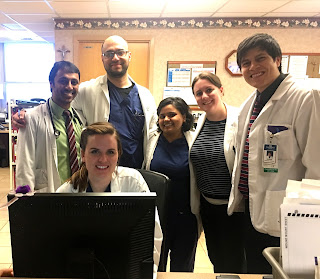
The rotation consisted of 11 other students from 4 different caribbean schools, 2 being PA students. This was the first rotation I had the opportunity of working directly with students from other schools which I met some great new friends. 12 students sounds like a lot but 2 were always on the night shift which left 10 others to cover the surgery board each day and there were almost always enough surgeries to go around.

One of my best friends throughout the rotation!
In the mornings, we prepared for morning rounds with the residents then went to surgery or helped with floor work then afternoon rounds. One benefit of this program is you get to see a lot of different surgeries. They primarily do laparoscopic and robotic surgeries with occasional open surgeries. You are working with the General Surgery team so get to see appendectomies, cholecystectomies, hernia repairs, and amputations galore but also colo-rectal surgeries such as hemicolectomies, hemorrhoidectomies and low anterior resections. There is multiple bariatric surgeons so I saw gastric sleeves and gastric bypass surgeries. There are also many breast surgeons so you will see lumpectomies and mastectomies with reconstruction. You are get to sit in on cardiothoracic surgeries such as valve repairs and replacements, coronary bypass surgeries and aortic aneurysm repairs. They also have many vascular surgeries so you will see fem-fem bypasses, angiograms w/ angioplasty, carotid endarterectomies and AVF formations. Some friends even got to see some neuro surgery for subdural hematoma evacuation and urological surgeries. I was very grateful for the exposure I got. While a majority of these surgeries you are scrubbing, you usually don't get to participate much as the residents are helping a majority of the time. They would let you hold retractors, cameras and maybe even throw a few closure sutures.

I had a few cool experiences in the OR. Having a surgeon (who is not normally too nice) say that he wanted me to be in everyone of his cases because I held the camera better than any other medical student he had, made me happy! Also getting to help close the chest after an open heart surgery (even though we NEVER get to scrub in on heart cases). Those were God's way of telling me to keep pushing onward even though I know you're tired :)
On the floors we would do a lot of wound dressings, wound debridements, placement of NG tubes and I&Ds. Every Wednesday was academic days where we would have lectures, cancer conference and sim labs. We had labs on Central line placement, chest tube placements and suturing. All were very helpful things that we had not gotten in our Maine semester so I enjoyed it. We also got called to all traumas and suture opportunities in the ER.

Our Team!
Studying for the Shelf:
Everyone will say the Surgery shelf is all Internal Medicine, ummm yes it is because surgery is just operating on medical conditions. They aren't going to ask you specific procedure related questions on the exam so they have to ask questions over the pathophysiology etc. It just makes sense. Learn IM but also postoperative complications.
Books I used: I used surgical recall through the rotation for pimping in the OR. I knew the surgeries I would have the next day, so I just read that chapter quickly the night before to refresh my memory. For the shelf, I used Pestana's surgical notes. The book not the pdf document. The pdf document is a bunch of cases, the book is short descriptions of a bunch of conditions. And as always I did the uWorld questions.
For the rotation here, we had weekly quizzes over chapters in Essentials of General Surgery. It's a good book to reference if you want a little more information than what Pestana's offers.
Operative Anatomy is a great resource for the step-by-step of each procedure. NOT necessary for the shelf but I liked to briefly skim it before each surgery to at least have a generalized idea of what was happening. It included a lot of anatomy which the surgeons would pimp on in the OR too.
Sunday, February 21, 2016
Hematology Oncology Elective
I've always enjoyed learning about hematology and oncology so decided to do an elective in it. I completed the elective in Ponce, Puerto Rico. I was placed with a physician that had a private office but also went to multiple hospitals to see patients as well. The nature of hematology, oncology is that it is a lot of counseling and follow up appointments just to check on how people are doing. The rotation itself wasn't extremely hands on because the physician adjusts treatment plans based on how the patient is responding to it. I was able to see a lot of bone marrow biopsies which was something new I had not seen before. It was a great learning experience because as the physician was describing things to the patients, I was listening and learning right along with them. The physician I rotated with also did clinical research which allowed me to see how that process works. He also presented at many events such as companies raising awareness about different types of cancers and risk factors.
One main goal of going to Puerto Rico for some rotations was to improve my medical spanish and that I did. Even though I studied Spanish throughout college, I never learned words like antibody or platelet. I'm much more confident in speaking Spanish to my patients and being able to understand them as well. I believe that everyone should be able to receive the same medical care regardless of the language they speak, but without being able to understand the patient this is very difficult. Most hospitals have a translator phone or interpreters that come but nothing replaces being able to connect with your patient with the same language. This is why I am so thankful that I speak 2 languages!
One main goal of going to Puerto Rico for some rotations was to improve my medical spanish and that I did. Even though I studied Spanish throughout college, I never learned words like antibody or platelet. I'm much more confident in speaking Spanish to my patients and being able to understand them as well. I believe that everyone should be able to receive the same medical care regardless of the language they speak, but without being able to understand the patient this is very difficult. Most hospitals have a translator phone or interpreters that come but nothing replaces being able to connect with your patient with the same language. This is why I am so thankful that I speak 2 languages!
Sunday, January 17, 2016
Electives in Michigan
These are the electives offered at 2 hospitals in Michigan.
Electives at McLaren Hospital
Electives at DMC Sinai-Grace Hospital (Given on a first come first serve basis, no electives available the months of July-October)
Electives at McLaren Hospital
- Anesthesia
- Cardiology
- Emergency Medicine
- ENT
- Gastroenterology
- Hematology/Oncology
- Infectious Disease
- ICU
- Neurology
- Opthalmology
- Osteopathic Manipulative Medicine
- Ortho
- Pain Management
- Pulmonary
- Radiology
Electives at DMC Sinai-Grace Hospital (Given on a first come first serve basis, no electives available the months of July-October)
- Cardiology
- Gastroenterology
- ICU (Medicine)
- ICU (Surgery)
- IM Sub I
- Nephrology
- Pulmonary
- Rheumatology
- Trauma Surgery
Wednesday, January 13, 2016
Scheduling Electives
So I had a suggestion to write about the process of scheduling electives! By the way, if anyone has suggestions on other topics, let me know! Go to the Contact Me tab or comment below!
How the elective process works is first you need to decide which electives you would like to do, when you would like to do them and where. You can do electives at affiliated hospitals which means that our school already has an agreement with them and the clinical department does all the work for you basically. These spots are mostly the same as where we can our core rotations offered which you can see a list of those here. You can also set up electives by yourself in "non-affliliate" hospitals. I will describe both processes.
Affiliated Electives
For a not so complete list of electives that our school offers, I wrote a post of how to access the list here. Another great resource is the facebook group for clinical students (you can not be apart of the group until you pass Step 1). Many people ask about where people suggest doing a certain elective and your peers are the best to get advise from. Calling the clinical department is always helpful so they can tell you what's available. Don't just call the clinical department for all electives though, have an idea of some you are interested in and go from there! When I receive information about what electives are offered in certain hospitals I try to post it on the blog as well.
Once you decide which elective you would like to do, you contact the clinical department and give them dates you would like to complete it. Sometimes they give you a contact name of a coordinator at the hospital to email directly about availability or sometimes they email the coordinator. Once you determine the timing is good, there is usually some paperwork sent to you and then it should be added to your Clinical Schedule on the portal! Make sure to check this often to make sure your electives and cores are placed on the schedule with the correct dates and locations.
Non-affiliate Electives
One way to score non-affiliate electives is by applying online to specific hospitals. Google any hospital you're interested in going to, along with "visiting medical student rotations" and it should take you to the page to see what's offered. Always read what's required to apply. UMHS is not LCME accredited (the accreditation for U.S. medical schools), many large university hospitals require visiting students to come from LCME accredited schools so it's not worth applying. Some applications have fees involved which you have to cover to apply. Some programs just include an email address of a coordinator if you are interested in doing a rotation there. Almost all applications require the signature of the Dean before applying. Print out the application, fill it out except the dean part and send it to the clinical coordinator. You must also fill out this form with every application you wish for them to send. ALWAYS follow up in a week to make sure someone is working on it!
Another way to get non-affiliated electives is by knowing a doctor who would be willing to take you on as a student or just by contacting smaller hospitals to see what's offered. I happened to met a physician on a tour in Washington D.C. from my home state and she said she would get me into electives at the hospital she works at. It's really about who you know. Connections get you a long way.
Once you have confirmed an elective with a hospital we are not affiliated with, you must get our school's permission to complete it. This involves sending the confirmation email received saying that you can do the rotation to the clinical coordinator along with any paperwork the hospital is asking you to complete. Many hospitals require the school to fill out part of the application and send it in. Complete all of your portions on the application and send it to the school to complete the rest. The clinical dean must approve all non-affiliate rotations.
Along with sending the email you must also log into the portal system, on the left hand side find "Change in Clinical Schedule Request" and click on it. Complete the Section that says "Please Add the Following Rotation to my Clinical Schedule". Give the department a few days then call to make sure they received it. This all must be done prior to 30 days before the start of the elective!!
So this was a crash course on how to schedule electives, if you have any questions let me know and happy scheduling!
How the elective process works is first you need to decide which electives you would like to do, when you would like to do them and where. You can do electives at affiliated hospitals which means that our school already has an agreement with them and the clinical department does all the work for you basically. These spots are mostly the same as where we can our core rotations offered which you can see a list of those here. You can also set up electives by yourself in "non-affliliate" hospitals. I will describe both processes.
Affiliated Electives
For a not so complete list of electives that our school offers, I wrote a post of how to access the list here. Another great resource is the facebook group for clinical students (you can not be apart of the group until you pass Step 1). Many people ask about where people suggest doing a certain elective and your peers are the best to get advise from. Calling the clinical department is always helpful so they can tell you what's available. Don't just call the clinical department for all electives though, have an idea of some you are interested in and go from there! When I receive information about what electives are offered in certain hospitals I try to post it on the blog as well.
Once you decide which elective you would like to do, you contact the clinical department and give them dates you would like to complete it. Sometimes they give you a contact name of a coordinator at the hospital to email directly about availability or sometimes they email the coordinator. Once you determine the timing is good, there is usually some paperwork sent to you and then it should be added to your Clinical Schedule on the portal! Make sure to check this often to make sure your electives and cores are placed on the schedule with the correct dates and locations.
Non-affiliate Electives
One way to score non-affiliate electives is by applying online to specific hospitals. Google any hospital you're interested in going to, along with "visiting medical student rotations" and it should take you to the page to see what's offered. Always read what's required to apply. UMHS is not LCME accredited (the accreditation for U.S. medical schools), many large university hospitals require visiting students to come from LCME accredited schools so it's not worth applying. Some applications have fees involved which you have to cover to apply. Some programs just include an email address of a coordinator if you are interested in doing a rotation there. Almost all applications require the signature of the Dean before applying. Print out the application, fill it out except the dean part and send it to the clinical coordinator. You must also fill out this form with every application you wish for them to send. ALWAYS follow up in a week to make sure someone is working on it!
Another way to get non-affiliated electives is by knowing a doctor who would be willing to take you on as a student or just by contacting smaller hospitals to see what's offered. I happened to met a physician on a tour in Washington D.C. from my home state and she said she would get me into electives at the hospital she works at. It's really about who you know. Connections get you a long way.
Once you have confirmed an elective with a hospital we are not affiliated with, you must get our school's permission to complete it. This involves sending the confirmation email received saying that you can do the rotation to the clinical coordinator along with any paperwork the hospital is asking you to complete. Many hospitals require the school to fill out part of the application and send it in. Complete all of your portions on the application and send it to the school to complete the rest. The clinical dean must approve all non-affiliate rotations.
Along with sending the email you must also log into the portal system, on the left hand side find "Change in Clinical Schedule Request" and click on it. Complete the Section that says "Please Add the Following Rotation to my Clinical Schedule". Give the department a few days then call to make sure they received it. This all must be done prior to 30 days before the start of the elective!!
So this was a crash course on how to schedule electives, if you have any questions let me know and happy scheduling!
Monday, December 7, 2015
Halfway Point
Well I am officially halfway through my clinicals = I'm in my 4th year! Things I've learned over this time:
- I've gone back to back with my rotations with a few weeks here and there. I would recommend doing the same! On the same note, you get burned out pretty easily. It has been nice to squeeze some electives in between my cores to give me a "break." Electives don't have shelves so they are usually a little more laid back and you can focus more on studying for Step 2.
- Schedule your electives early, especially if you want electives at non affiliate locations (aka hospitals our school doesn't necessarily have relationships with, and you have to apply for or know a doctor who is willing to take you on). Most hospitals start scheduling May 1st for the entire year. So if you want a rotation in March, you have to apply the May before that. Also keep in mind that some hospitals don't let us apply because you have to be from a LCME accredited school, which we are not at this time. Look at the hospital's website for visiting students to see if you are eligible or not.
- Study everyday! I know Step 2 seems like a long ways away but it will sneak up and the more times you go over the material, the more it will stick!
- Be willing to move around if need be, even though it is tiring moving all the time, I have loved it! I've gotten to explore so many new places and once you're a doctor you won't have the time to travel as much so do it now! :) I went to Augusta (nothing to really explore there but the rotations were good), Atlanta (lots to explore), Puerto Rico (the most beautiful place), Connecticut and Wyoming to come!
- Your Background Check and Drug Screen expire after one year so you have to redo it. Be prepared for this, I was not informed and then had to do it very quickly to start my next rotation.
- For OBGYN electives your choices are Baltimore, Augusta or Atlanta, Michigan or Puerto Rico.
This is all that I can think of now but I'm sure the list will continue to grow!
Monday, November 16, 2015
Electives in Washington D.C.
Wanting to do some electives in Washington D.C.? Here's a list of what we have affiliations with:
- Neurology
- Family Medicine Elective
- Critical Care
- Ophthalmology
- OBGYN Elective
- Pediatrics Outpatient Elective
- Radiology
- Internal Medicine Elective
- Dermatology
- Cardiology
- Psychiatry Elective
Sunday, November 15, 2015
Puerto Rico
So I'm currently in Puerto Rico and am sooo blessed to be here. I think time and time again how I have gotten to see so many places all in the name of medical school :) I highly recommend people coming to Puerto Rico for some electives if you're not from Puerto Rico. It's a great opportunity that our school has an affiliation with Ponce Health Sciences University. You are required to have some sort of Spanish speaking abilities. Majority of patients only speak Spanish so all interviewing is done in Spanish. Charting however is done in English, because of this, most, if not all, doctors are bilingual. The university also offers a 4 week Medical Spanish Elective for those that are not so confident in Spanish. More on that below. So here's how you go about scheduling your electives in Puerto Rico!

So about the Medical Spanish Elective (again you can find all the information, including the schedule in the Clinical Elective Guide on the portal). The elective includes online modules that must be completed prior to starting the elective. You then spend 1 week each in Family Medicine, Peds, Internal Medicine and OBGYN going to morning report, listening to rounds and practicing speaking Spanish will Spanish-speaking patients. It sounds like a pretty cool experience!
 I've gotten to see so many cool places here in Puerto Rico including forests, islands, cities and waterfalls. Puerto Rico has it all! Even if you don't come for school come to just explore! This island is very underestimated for how much it has to offer and you don't even need a passport!
- Ponce Health Sciences University basically offers every single elective so think of what you'd like to do and come up with a list.
- Contact the Clinical Department and give them a list of a few electives you're interested in and the dates and they will contact Ponce to see what's available during that time.
- Once you have electives confirmed, there is some paperwork that needs to be completed prior to beginning you can request this from the Clinical Department or by retrieving it by logging onto the Student Portal and on the left hand side there is a link for "Official Documents" then click on Clinical Elective Guide. Search for Ponce electives.

I'm doing Hematology Oncology right now and next week I'm beginning Infectious Disease!
So about the Medical Spanish Elective (again you can find all the information, including the schedule in the Clinical Elective Guide on the portal). The elective includes online modules that must be completed prior to starting the elective. You then spend 1 week each in Family Medicine, Peds, Internal Medicine and OBGYN going to morning report, listening to rounds and practicing speaking Spanish will Spanish-speaking patients. It sounds like a pretty cool experience!

Monday, October 12, 2015
Internal Medicine
I'm done with Internal Medicine which means another 12 weeks of rotations completed! I am still in Atlanta at DeKalb Hospital. The first 6 weeks of the rotation was outpatient and myself and 5 other students saw a lot of patients! The second 6 weeks was inpatient and I learned a ton! I wish the entire 12 weeks was inpatient. The attendings challenged us constantly to think outside the box and also make connections. It was a great experience. Every morning we had morning report led by an IM resident in which we would present a case and the group would have to work through it, asking the right questions, coming up with differential diagnosis' and a plan of action. It really made me think about how to approach a patient in an inpatient setting. I have nothing but good things to say about the residents we worked with. I learned sooo much from them! We worked with IM residents as well as podiatry residents that are required to rotate through IM. The attendings would then let us see patients on our own, take a history, do a physical exam and then present the patient to them on rounds. We were required to know up-to-date labs and other information about our patients and it helped us understand management better. We also had weekly lectures over common topics by attendings to solidify our knowledge. Of the 6 weeks inpatient, 1 week of that was spent in the ICU. I really enjoyed my time, learning about end of life care and critical care in general.
I took the shelf, a few days after I finished the rotation. I thought it was challenging. To prepare, I uses Case Files: Internal Medicine and UWorld questions. I tried to read Step Up to Medicine at the beginning because everyone said it is a great resource but I never got through the whole thing due to time but plan to use it more as I prepare for Step 2.
Going forward: I am set to take Step 2 CS in 1 week! I have been crazily studying because I have a few weeks off before I leave for Puerto Rico to start some electives. I always heard that the best time to take CS is right after your Internal Medicine Core or after an ER elective because you have a lot of experience taking full histories and doing physical exams so it's natural at that point. I do feel morning report as I mentioned above helped prepare me for CS. I will post about my experience afterwards in a week!
I took the shelf, a few days after I finished the rotation. I thought it was challenging. To prepare, I uses Case Files: Internal Medicine and UWorld questions. I tried to read Step Up to Medicine at the beginning because everyone said it is a great resource but I never got through the whole thing due to time but plan to use it more as I prepare for Step 2.
Going forward: I am set to take Step 2 CS in 1 week! I have been crazily studying because I have a few weeks off before I leave for Puerto Rico to start some electives. I always heard that the best time to take CS is right after your Internal Medicine Core or after an ER elective because you have a lot of experience taking full histories and doing physical exams so it's natural at that point. I do feel morning report as I mentioned above helped prepare me for CS. I will post about my experience afterwards in a week!
Friday, July 10, 2015
Perinatology Elective
Life gets a little busy when you're doing rotations and I completely forgot to write about my first elective that I completed back in May in Augusta for 4 weeks in Perinatology. Perinatology is a subspecialty of obstetrics that focuses on high-risk pregnancies. I really enjoyed my time. We did a ultrasound on every patient mostly because they were usually new patients and being referred to us by their regular OBGYN. I got really good at reading ultrasounds and even scanned some patients myself. I have a new appreciation for sonographers, you wouldn't think but that really hurts your arm after awhile or maybe I'm just a weakling and need to work out a little more...
We had a genetic counselor who worked in our office as well and I got to work with her, counseling patients on genetic conditions etc. Two of my favorite things, genetics and OB! Ever since taking my first genetics course in college, I've been fascinated by it. Maybe because it has math involved which has always been a strong point of mine. The interest in genetic diseases grew when my cousin was born was a severe genetic metabolic disease discovered after he went home but before the newborn screening results came back. I know how important genetic counselors are for families!
I really enjoyed the rotation especially because I'm interested in OBGYN and got to see the more challenging cases that I didn't get to see in my OBGYN core rotation. I would highly recommend this rotation! Not only did my OBGYN clinical skills improve but so did my counseling skills.
I really enjoyed the rotation especially because I'm interested in OBGYN and got to see the more challenging cases that I didn't get to see in my OBGYN core rotation. I would highly recommend this rotation! Not only did my OBGYN clinical skills improve but so did my counseling skills.
Pediatrics
I just finished Pediatrics. Can't believe I've finished half of my cores already! Everything is flying by. I arrived in Atlanta in June and I am loving being here. I've made it to The World of Coca-Cola, the Georgia Aquarium, walked around Centennial Park, practiced my golf at TopGolf, watched the laser show and fireworks at Stone Mountain and visited Six Flags over Georgia. I still want to catch a Braves game and maybe even a pre-season game of the Falcons. Atlanta Botanical gardens, the zoo, and the Martin Luther King Jr National Historic Site are also on my list to do.
My schedule for pediatrics has been 4 days a week and only 1/2 days so it has given me a lot of time to study as well as get out and explore ATL. I worked with 5 other students which was kinda a bummer because it just didn't allow me the exposure I wanted and it was all outpatient so the rotation lacked the inpatient experience. While I loved seeing the adorable children, I don't think pediatrics is for me. It's been a fun time though.


Some of the students from UMHS I worked with as well as our preceptor.
As far as studying for the shelf, I read Case Files, started Kaplan videos but I'm just not a video person so never finished and completed uWorld and Pretest questions. I think uWorld was almost a little too easy so I chose to also do Pretest which is another 500 questions. I love the explanations that Pretest offers so I honestly learned a ton just from reading those. Highly suggest it and they are a little more difficult and ask more about those rare conditions that somehow always sneak their way onto the shelves. Oh and I usef\d First Aid for the Wards for all the core rotations because it gives a general review of the high yield info. Test day is July 18th!
Next up is: Internal Medicine, getting into the nitty gritty of medicine!
Friday, July 3, 2015
Electives offered for UMHS
Want to know some places you can do electives and what is offered? If you log into CAMS, on the left column it says "Official Documents" under "Administrative Services". The last document is called "UMHS Clinical Elective Guide". While this is not a complete list, it is a start!
Thursday, June 4, 2015
Living in Augusta, GA
So I've been in Augusta for about 3 months. I've realized some great places to eat, live etc
Where to live:
I found my place on craigslist, then on facebook. It's a 5 bedroom 4 1/2 bathroom house. I enjoyed living here and it is mostly made up of medical students. It's located in a quiet neighborhood and is minutes away from Wal-mart, restaurants etc. It is a bit of a drive (25 mins) to University Hospital (where you do a majority of your deliveries for OBGYN). Even my family practice office was about 25 mins away as well. It's not a bad drive though. Here is the facebook link if anyone wants to check it out. https://www.facebook.com/4618BrittanyDrEvansGA30809?fref=ts
Another option that I know a lot of students use is rotatingroom.com, airbnb.com or craiglist or looking at the clinical students facebook page where people will post landlord information sometimes.
Where to eat:
So I just discovered this great little Indian Restaurant called Lahore Express off of Washington Road. I guess it's techincally Pakistani but delicious none the less. They do have a limited menu and it's carry-out even though they have a table to sit at outside.
The Pizza Joint, there is one located in Evans and Downtown Augusta. Both have patios and are perfect places to grab a slice, drink a beet and enjoy the weather in the summer. It's new york style and slices are huge and cheap. I recommend the Chicken Diane, soooo good! I know the downtown one has trivia on Thursday nights from 7-9pm which is fun!
Mellow Mushroom is also a fun pizza place, I realize this is a chain but we don't have it up north so it was yummy to experience.
Moe's another chain similar to Chipotle but dare I say better... Again we don't have these up north.
Belair Donuts. So...donuts are my weakness and these are the best, homemade donuts around. They are only open in the mornings from 5am-1pm but defintely worth stopping by!
For a burger, Village Deli Sub and Pub, it's right next door to where you'll have your orientation. They have subs as well but the only thing I've tried is their burgers because they are delicious! ***People may recommend Farmhaus Burger, another restaurant, but honestly I was not a fan, it's expensive and just not that good.
Boll Weevil, I went here for my birthday, while the food was just ok, the desserts are to die for. Stop in just for a slice of cheesecake! Located downtown
El Patron Taqueria. This is delicious. If you want authentic mexican food, go here! Sooo good and cheap. It's off of Washington right by the Pakistani place I talked about above and the bowling alley in a strip mall.
What to do:
Every Monday, Brunswick bowling has $1 night. It's fabulous and a group of us made it a tradition. Show up around 8:45 and wait in line until 9 and shoes and each game is just $1!
Where to study:
The Medical College of Georgia has a medical library near all the hospitals. It's called the Greenblatt Library, it's super clean and nice and quiet. I spent most of my nights and weekends here. If you do live in Evans, the Columbia County library is nice but since it's a public library it's not the quietest and it's not open very late.
Where to worship:
I ended up finding a non denominational church in Evans called In Focus. It allowed me to join a small group and get to know others from the church. We also did some volunteer projects by making bags for foster children and going to the Ronald McDonald house and watching a movie with the kids.
Where to work out:
Some friends and I joined Evan Fitness Club. It was nice because it was literally like 5 minutes away from our house. It's the nicest gym I've ever been in (but that's not saying much because I honestly haven't been in a ton). They have multiple rooms where they teach classes. One room for yoga, barre, a 2 level spinning class room and another room for Zumba, ab classes etc. They also have a Cardio Theater. This room is equipped with treadmills, ellipticals and bikes with a huge screen that plays different movies every day! This is where I would start my work out everytime! The whole downstairs is free weights, machines etc. They have a couple of racquetball courts as well. Ohhh and the best part was the showers...jets on all sides. They have a suana in the locker rooms too!
Where to live:
I found my place on craigslist, then on facebook. It's a 5 bedroom 4 1/2 bathroom house. I enjoyed living here and it is mostly made up of medical students. It's located in a quiet neighborhood and is minutes away from Wal-mart, restaurants etc. It is a bit of a drive (25 mins) to University Hospital (where you do a majority of your deliveries for OBGYN). Even my family practice office was about 25 mins away as well. It's not a bad drive though. Here is the facebook link if anyone wants to check it out. https://www.facebook.com/4618BrittanyDrEvansGA30809?fref=ts
Another option that I know a lot of students use is rotatingroom.com, airbnb.com or craiglist or looking at the clinical students facebook page where people will post landlord information sometimes.
Where to eat:
So I just discovered this great little Indian Restaurant called Lahore Express off of Washington Road. I guess it's techincally Pakistani but delicious none the less. They do have a limited menu and it's carry-out even though they have a table to sit at outside.
The Pizza Joint, there is one located in Evans and Downtown Augusta. Both have patios and are perfect places to grab a slice, drink a beet and enjoy the weather in the summer. It's new york style and slices are huge and cheap. I recommend the Chicken Diane, soooo good! I know the downtown one has trivia on Thursday nights from 7-9pm which is fun!
Mellow Mushroom is also a fun pizza place, I realize this is a chain but we don't have it up north so it was yummy to experience.
Moe's another chain similar to Chipotle but dare I say better... Again we don't have these up north.
Belair Donuts. So...donuts are my weakness and these are the best, homemade donuts around. They are only open in the mornings from 5am-1pm but defintely worth stopping by!
For a burger, Village Deli Sub and Pub, it's right next door to where you'll have your orientation. They have subs as well but the only thing I've tried is their burgers because they are delicious! ***People may recommend Farmhaus Burger, another restaurant, but honestly I was not a fan, it's expensive and just not that good.
Boll Weevil, I went here for my birthday, while the food was just ok, the desserts are to die for. Stop in just for a slice of cheesecake! Located downtown
El Patron Taqueria. This is delicious. If you want authentic mexican food, go here! Sooo good and cheap. It's off of Washington right by the Pakistani place I talked about above and the bowling alley in a strip mall.
What to do:
Every Monday, Brunswick bowling has $1 night. It's fabulous and a group of us made it a tradition. Show up around 8:45 and wait in line until 9 and shoes and each game is just $1!
Where to study:
The Medical College of Georgia has a medical library near all the hospitals. It's called the Greenblatt Library, it's super clean and nice and quiet. I spent most of my nights and weekends here. If you do live in Evans, the Columbia County library is nice but since it's a public library it's not the quietest and it's not open very late.
Where to worship:
I ended up finding a non denominational church in Evans called In Focus. It allowed me to join a small group and get to know others from the church. We also did some volunteer projects by making bags for foster children and going to the Ronald McDonald house and watching a movie with the kids.
Where to work out:
Some friends and I joined Evan Fitness Club. It was nice because it was literally like 5 minutes away from our house. It's the nicest gym I've ever been in (but that's not saying much because I honestly haven't been in a ton). They have multiple rooms where they teach classes. One room for yoga, barre, a 2 level spinning class room and another room for Zumba, ab classes etc. They also have a Cardio Theater. This room is equipped with treadmills, ellipticals and bikes with a huge screen that plays different movies every day! This is where I would start my work out everytime! The whole downstairs is free weights, machines etc. They have a couple of racquetball courts as well. Ohhh and the best part was the showers...jets on all sides. They have a suana in the locker rooms too!
Tuesday, April 28, 2015
Scheduling Step 2 CS
So how Step 2 CS scheduling works is similar to Step 1. You are given a window period to take it but instead of a 3 month period, you are given 1 year and the year starts after you are approved. So if you are approved in May 2015 then you have until May 2016 to take the exam. UMHS does not have any requirements before you can take the exam. I am taking it at the end of my 3rd year but others choose to take it later, it all depends on what makes you feel comfortable. I will have had all my cores finished except Surgery and Psych which are not extremely important before CS anyways. I would recommend taking it at least by mid-July before you apply that September. This will ensure your score will be back before you submit your application for residencies. You can see score reporting periods below.
Unlike Step 1, you can only take Step CS at 1 of 5 different locations across the US. Spots fill up quickly, as all medical students are competing for the same spots. The locations are: Los Angeles, Houston, Atlanta, Chicago and Philadelphia. If you want to look at the availability of the different locations you can go here: https://secure2.ecfmg.org/emain.asp?app=csess You must have a ECFMG number to look though. As of right now it looks like spots are booked about 4 months in advance so this is something you need to plan ahead for, otherwise you may have to wait.
Go to ECFMG website and sign into the IWA. On the main page it says "Start a New Application" and that's all you do. Then at the end of all the questions you pay $1,505! I will now be eating Ramen for the next 2 years :) It takes anywhere between 2-4 wks to get your application approved and to receive your scheduling permit. Apply at least 5 months before you plan on taking the exam.
I would recommend setting a date even if you aren't sure when you want to take it. You have up to 2 weeks or so before the exam to cancel or reschedule without fees. There is a nice service that you can have ecfmg email you when a spot opens up on the dates you want but make sure you log in right when you get the email because most likely it will be filled again. You can find this on the page that says "Schedule a testing appointment", scroll all the way down and find "Add/Edit Scheduling Email Notifications."
I set my date....October 19th in Atlanta before I leave.. :)
When you get your score

Unlike Step 1, you can only take Step CS at 1 of 5 different locations across the US. Spots fill up quickly, as all medical students are competing for the same spots. The locations are: Los Angeles, Houston, Atlanta, Chicago and Philadelphia. If you want to look at the availability of the different locations you can go here: https://secure2.ecfmg.org/emain.asp?app=csess You must have a ECFMG number to look though. As of right now it looks like spots are booked about 4 months in advance so this is something you need to plan ahead for, otherwise you may have to wait.
Go to ECFMG website and sign into the IWA. On the main page it says "Start a New Application" and that's all you do. Then at the end of all the questions you pay $1,505! I will now be eating Ramen for the next 2 years :) It takes anywhere between 2-4 wks to get your application approved and to receive your scheduling permit. Apply at least 5 months before you plan on taking the exam.
I would recommend setting a date even if you aren't sure when you want to take it. You have up to 2 weeks or so before the exam to cancel or reschedule without fees. There is a nice service that you can have ecfmg email you when a spot opens up on the dates you want but make sure you log in right when you get the email because most likely it will be filled again. You can find this on the page that says "Schedule a testing appointment", scroll all the way down and find "Add/Edit Scheduling Email Notifications."
I set my date....October 19th in Atlanta before I leave.. :)
When you get your score
Sunday, April 12, 2015
Family Medicine
I am almost done with this rotation and have yet to post anything about it. This rotation has been busy! I am still in Augusta, GA. I did my family medicine rotation with Dr. Overstreet-Wright and she is fabulous. Very kind and willing to answer any/all of your questions. The clinic she works in also has a physican assistant and nurse practitioner which are also very friendly. The staff are fabulous too. So basically I loved this rotation :) We see around 25 patients a day usually depending on the day. The clinic has a women's health office upstairs, a dental office and a pharmacy. Due to the women's clinic being upstairs we don't deal with any gyn issues as we just send them there. The patient population is older but we did see an occasional child. You become very good at the treatment of hypertension and diabetes!
In my clinic, we would go in prior to the doctor and interview the patient and complete a limited physical exam necessary and then discuss the patient with the dr, then go in together. She would ask additional questions, that I forgot to ask but it was a great learning process because the next time I got a patient I remembered to ask those questions I forgot the first time.
Family medicine is a lot of the same things over and over but you have variety as well. My pharmacology knowledge greatly increased because previously I did an OBGYN rotation and as expected we don't deal with a lot of pharm. It challenges your differential diagnosis skills.
With each rotation, I think that this is the one that I want to do. I loved OB and I really liked family too. I'm just blessed to be able to soak in all the knowledge from these preceptors. Throughly enjoy each rotation you are given!


Preparing for the shelf:
I read Case Files Family Medicine. I really enjoy this series, it's better than a textbook and easier to get through. Family Medicine is very broad so you have topics from rashes to hypertension to thyroid disorders.
USMLE uWorld doesn't have a specific set of questions set aside for family medicine so I did AAFP questions. If you go to their website and sign up for a membership, it's $35 dollars for the board style questions. They are helpful.
My shelf is April 20th. Ekkk nervous, 1 week then I'm 2 rotations down :)
Update on the shelf: It was hard! Kinda felt like Step 1 all over again...
Update on the shelf: It was hard! Kinda felt like Step 1 all over again...
Thursday, April 2, 2015
Electives in Atlanta, GA
Here are the electives available in Atlanta through DeKalb:
Start dates: 09/07/15, 10/05/15, 11/02/15, 11/30/15, 12/28/15, 01/25/16, 02/22/16, 03/21/16, 04/18/16, 05/16/16, 06/13/16
Four week electives:
Family Medicine
Family Medicine Sub-I
Occupational medicine
Pain management
Physical medicine and rehabilitation
Sports medicine
Urgent care
Internal Medicine
Cardiology
Clinical research
Dermatology
Emergency Medicine
Endocrinology
Gastroenterology
Geriatric Medicine
Hematology/oncology
Internal Medicine Sub-Internship
Infectious Disease
Interventional radiation
Nephrology
Neurology
Opthamalogy
Otolaryngology
Pathology
Pulmonology
Radiology
Radiation Medicine
Rheumatology
Urology
OBGYN
Gynecology oncology
Gynecology Surgery
OBGYN Sub-I
Pediatrics
Pediatrics Sub-I
Psych
Addictive psych
Forensic psych
Geriatric psych
Psych Sub-I
Surgery
Colorectal surgery
Orthopedic surgery
Plastic surgery
Surgery Sub-I inpatient and outpatient
Vascular surgery
Flexible Electives (can start any Monday of any month, 2-6 weeks in length):
Family Medicine Sub-Internship
Occupational Medicine
Pain Management
Urgent Care
Start dates: 09/07/15, 10/05/15, 11/02/15, 11/30/15, 12/28/15, 01/25/16, 02/22/16, 03/21/16, 04/18/16, 05/16/16, 06/13/16
Four week electives:
Family Medicine
Family Medicine Sub-I
Occupational medicine
Pain management
Physical medicine and rehabilitation
Sports medicine
Urgent care
Internal Medicine
Cardiology
Clinical research
Dermatology
Emergency Medicine
Endocrinology
Gastroenterology
Geriatric Medicine
Hematology/oncology
Internal Medicine Sub-Internship
Infectious Disease
Interventional radiation
Nephrology
Neurology
Opthamalogy
Otolaryngology
Pathology
Pulmonology
Radiology
Radiation Medicine
Rheumatology
Urology
OBGYN
Gynecology oncology
Gynecology Surgery
OBGYN Sub-I
Pediatrics
Pediatrics Sub-I
Psych
Addictive psych
Forensic psych
Geriatric psych
Psych Sub-I
Surgery
Colorectal surgery
Orthopedic surgery
Plastic surgery
Surgery Sub-I inpatient and outpatient
Vascular surgery
Flexible Electives (can start any Monday of any month, 2-6 weeks in length):
Family Medicine Sub-Internship
Occupational Medicine
Pain Management
Urgent Care
Wednesday, March 18, 2015
Electives in Augusta, GA
Interested in doing electives in Augusta, GA?
Here is a list of ones that our school currently offers. Start times vary.
ACGME Electives
Here is a list of ones that our school currently offers. Start times vary.
ACGME Electives
- Trinity Hospital
- Family Medicine Elective
- OB/GYN Elective
- Gynecologic Oncology
- Infertility
- Perinatology
- Emergency Medicine
- Doctor's Hospital
- Surgery
- Orthopedic Surgery
- Urology
- Vascular Surgery
- Otolaryngology
- Burn Surgery
Non-ACGME Electives
- Trinity Hospital
- Ambulatory Internal Medicine
- Anesthesiology
- Cardiology
- Clinical Reasearch
- Gastroenterology
- Neonatology
- Nephrology
- Oncology
- Pathology
- Primary Care
Saturday, March 14, 2015
OBGYN Shelf
I finished my OBGYN rotation and took the shelf on Friday! Friday March 13th, pretty unlucky of a date. About a month before your rotation ends, the clinical department will send you an email saying they are registering you for a two week period to take the exam, a few days later you will receive a scheduling permit from prometric and you can then schedule. There were not times offered in Augusta over the weekends so I ended up choosing a Friday. The exam does cost $106. It is 100 questions and you are allotted 2 hours and 30 minutes without breaks (You can always get up and take a break but the time keeps ticking).
Prepping for the exam:
- Throughout the rotation I read Case Files, it's an excellent resource. I read it almost 2 times.
- I also used Step 2 Uworld which mimicked the questions on the actual exam.
- NBME offers 2, 50 question exams for $20 each, but I didn't take them as I felt prepared with the Uworld questions that I did.
- I'm working on possibly getting UMHS to have a subscription to the Association of Professors of Gynecology and Obstetrics, as they have a killer qbank called uWISE which all of the U.S medical students use to prep for the exam, otherwise an individual subscription is over $200 which isn't worth it. More on that to come.
How the NBME shelf is used:
What you receive on the test has nothing to do with the grade you receive for the rotation in general. Your grade is determined solely on your evaluation from your preceptor. You must pass the NBME in order to pass the rotation. A passing grade is 50%. If you do not receive a passing grade the first time, you will have one more chance to take the exam and if you fail a second time, you must redo the entire rotation.
According to the clinical department, your scores from your NBME shelves will not be released to any schools or residencies programs in the future. So techinically there is no added benefit on scoring extremely high on a shelf in a area in which you want to gain a residency spot. Of course, you always want to score well as you are continually prepping for the USMLE Step 2.
When will you receive your score:
You should receive it 3-5 buisness days after the 2 week testing period ends but you will have to email Isabel at imonarca@umhs-sk.net to receive a copy of your report.
**Update: I passed!
**Update: I passed!
Saturday, February 14, 2015
OBGYN Rotation
Hey ya'll.
So many have been asking how my first rotation is going in Augusta, GA. I started with OBGYN and am about half way through. For anyone interested in Augusta rotations, the rotations are through Trinity usually but we work mostly in clinics. I am paired with one other UMHS student and we both follow our preceptor around.

Monday mornings are our surgery days and so far the only surgeries we've done are bilateral tubal ligations but we have hysterectomies and other surgeries so I'm excited! I'm usually first assist and get to hold the camera, assist in other ways and close at the end! The rest of the days are clinic days and we see about 25 patients a day. If deliveries are occuring during clinic hours we have to reschedule clinic patients and run to either Trinity or University Hospital to deliver. The other UMHS student and I rotate for deliveries but in the last 3 weeks I've gotten to assist in vaginal deliveries and C-sections. Thursday afternoons are our procedure day so we do insertion of IUDs, colposcopies and any other in-office procedure.

To be honest, I was not looking forward to my OBGYN rotation. I thought I knew that this was something I didn't want to go into but after the last 3 weeks I think this may be what I want to do! It goes to show that you should go into every rotation with an open mind!
Augusta, GA is a great location. I live in Evans, which is a little north of Augusta and it takes me about 20-25 min to get to my clinic. I live in a 5 bedroom house with 4 other guys. One of the guys goes to UMHS but the others are mostly in the military as there is a large army base here. The rooms are nice, completely furnished and we all basically have our own bathroom in the room! It's nice and cheap. I will be leaving Augusta in May so if anyone is rotating here, make sure to email me and I'll give you the details.
Other recommendations for housing: I found mine on craigslist but he was catering specifically to UMHS, AUA and Ross students so I felt a little bit better about it than just a random craigslist ad. I would recommend looking at airbnb if you don't mind renting a room in someone's house. I orginally found my place in Atlanta on airbnb but unfortunately they emailed me and said they were moving. It's hard to find locations that are short term and furnished and airbnb is great for that!
Books: I bought FirstAid for the Wards. This book has a section for each rotation and gives you the high yield topics as well as sample admission notes and what to expect. I think its super helpful.
For OBGYN, I'm using CaseFiles. I like the format it is set up in but others prefer Blueprints. I think you will be ok with CaseFiles or Blueprints. Here is a link to a document which is nice that we found online that is a summary of topics. https://drive.google.com/file/d/0B7aP9Ft3g9drNjJKU1A1WnIzYTVzNkwzZlh0WGQ1eW04QnNF/view?usp=sharing
I also have been doing some questions out of an online PreTest OBGYN book. Don't go overboard buying books for rotations because you won't get to read all of them. I forgot how tiring it was to work all day and then have to study.
Talk to you soon!
Laura
So many have been asking how my first rotation is going in Augusta, GA. I started with OBGYN and am about half way through. For anyone interested in Augusta rotations, the rotations are through Trinity usually but we work mostly in clinics. I am paired with one other UMHS student and we both follow our preceptor around.
Monday mornings are our surgery days and so far the only surgeries we've done are bilateral tubal ligations but we have hysterectomies and other surgeries so I'm excited! I'm usually first assist and get to hold the camera, assist in other ways and close at the end! The rest of the days are clinic days and we see about 25 patients a day. If deliveries are occuring during clinic hours we have to reschedule clinic patients and run to either Trinity or University Hospital to deliver. The other UMHS student and I rotate for deliveries but in the last 3 weeks I've gotten to assist in vaginal deliveries and C-sections. Thursday afternoons are our procedure day so we do insertion of IUDs, colposcopies and any other in-office procedure.

About to deliver some babies! Lucky to be apart of their first moment on earth!
To be honest, I was not looking forward to my OBGYN rotation. I thought I knew that this was something I didn't want to go into but after the last 3 weeks I think this may be what I want to do! It goes to show that you should go into every rotation with an open mind!
Augusta, GA is a great location. I live in Evans, which is a little north of Augusta and it takes me about 20-25 min to get to my clinic. I live in a 5 bedroom house with 4 other guys. One of the guys goes to UMHS but the others are mostly in the military as there is a large army base here. The rooms are nice, completely furnished and we all basically have our own bathroom in the room! It's nice and cheap. I will be leaving Augusta in May so if anyone is rotating here, make sure to email me and I'll give you the details.
Other recommendations for housing: I found mine on craigslist but he was catering specifically to UMHS, AUA and Ross students so I felt a little bit better about it than just a random craigslist ad. I would recommend looking at airbnb if you don't mind renting a room in someone's house. I orginally found my place in Atlanta on airbnb but unfortunately they emailed me and said they were moving. It's hard to find locations that are short term and furnished and airbnb is great for that!
Books: I bought FirstAid for the Wards. This book has a section for each rotation and gives you the high yield topics as well as sample admission notes and what to expect. I think its super helpful.
For OBGYN, I'm using CaseFiles. I like the format it is set up in but others prefer Blueprints. I think you will be ok with CaseFiles or Blueprints. Here is a link to a document which is nice that we found online that is a summary of topics. https://drive.google.com/file/d/0B7aP9Ft3g9drNjJKU1A1WnIzYTVzNkwzZlh0WGQ1eW04QnNF/view?usp=sharing
I also have been doing some questions out of an online PreTest OBGYN book. Don't go overboard buying books for rotations because you won't get to read all of them. I forgot how tiring it was to work all day and then have to study.
Talk to you soon!
Laura
Subscribe to:
Posts (Atom)